Tapati and the Kuru Dynasty: The Roots of Greatness
Tapati marrying Samvaran marked the start of the Kuru dynasty through their son, Kuru. Their family line became key in the famous Mahabharata story. Kuru, guided by his mother, Tapati, stood for good values and righteousness (dharma). These values became the Kurus’ important heritage.
The Kurus, Tapati’s offspring, greatly influenced Bharata’s country’s course. With the brave Bhishma and the titanic Pandavas-Kauravas clash, the Kuru family showcases the timeless battle between righteous and unrighteous acts. It’s believed that Tapati’s sacred blessing filled this family with power, knowledge, and toughness.
The mention of Tapati in the Mahabharata may be small, yet everywhere her impact can be felt. As a mother figure in the Kuru family, she holds a key part in the story’s morals and spiritual guidelines. The tale of Tapati brings forward the holy beginnings of the Kurus, along with their noble obligation to embrace dharma.
In the Mahabharata, every character’s moves link to the universe’s big picture. Our divine connector, Tapati, bridges heaven’s plan to Earth’s happenings. Her weight is felt in her offspring’s trials and values. So, she’s a crucial part of this epic’s ethical fabric.
Tapati’s Symbolism in Indian Mythology
Tapati is more than a celestial princess; she is a symbol of harmony, duty, and divine grace. Her story emphasizes the importance of aligning earthly actions with cosmic principles. Tapati’s life is a testament to the power of love, the sanctity of marriage, and the enduring impact of righteousness across generations.
In Indian art and literature, Tapati often represents the gentle warmth of the sun—nurturing yet powerful. She is a reminder that divine energy, when channeled with compassion and duty, can create legacies that stand the test of time.
Lessons from Tapati’s Life
Tapati’s tale offers timeless lessons:
- Finding Strength in Gentleness: Tapati showed that you can be both strong and gentle at the same time
- Standing for What’s Right: When Tapati and Samvaran got together, and she became part of the Kuru family, it showed how much doing the right thing matters.
- Gods and Humans are Connected: Tapati proved that Heaven and Earth aren’t so far apart. The blessings from the gods often play a big part in what happens in our lives.
Conclusion
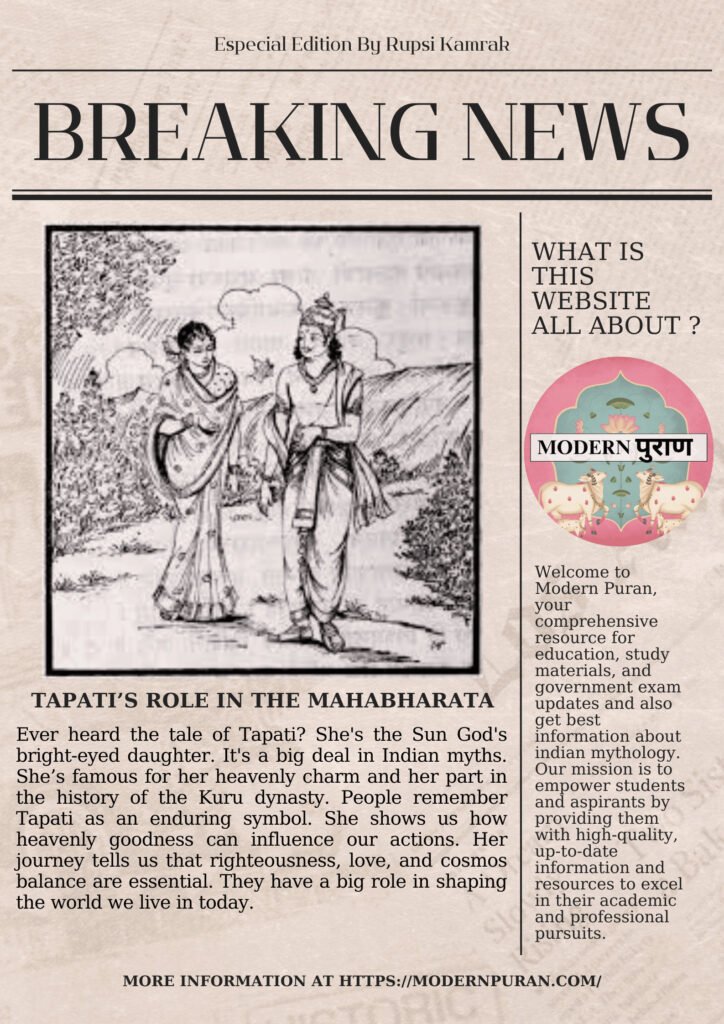
Ever heard the tale of Tapati? She’s the Sun God’s bright-eyed daughter. It’s a big deal in Indian myths. She’s famous for her heavenly charm and her part in the history of the Kuru dynasty. People remember Tapati as an enduring symbol. She shows us how heavenly goodness can influence our actions. Her journey tells us that righteousness, love, and cosmos balance are essential. They have a big role in shaping the world we live in today.